
Mechanical design
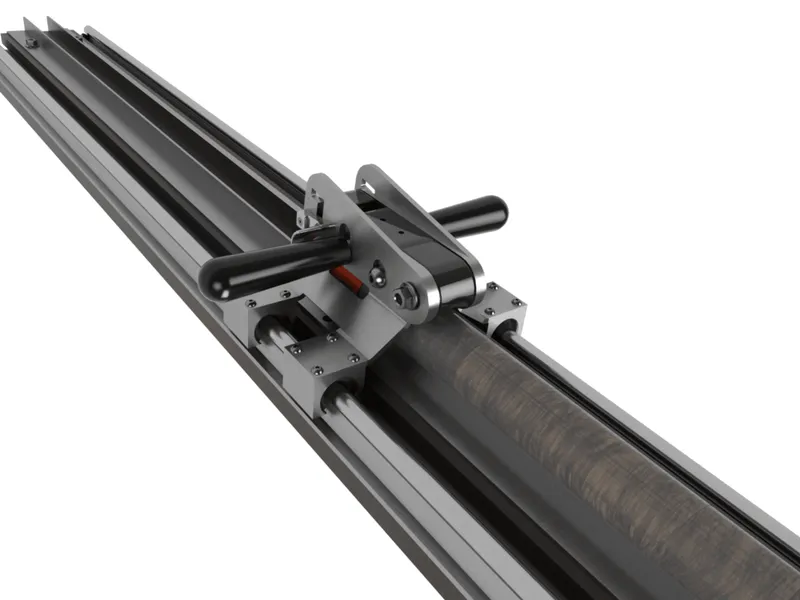
Core Line Slicer
A custom rail-mounted tool for safe, precise cutting of plastic soil core liners, built to survive repeated use in agricultural sampling workflows.
Engineering services
Bring us an idea, a proof of concept or a working prototype. One team covers mechanical, electronics, firmware, industrial design, machine learning and spectroscopy, and takes your product through to a pilot run and into production. Take one discipline, several, or the whole stack.
Starting points
Most engineering firms want a specification before they will quote. We start earlier than that, and we will pick up something that already exists.
You know the problem and who has it. We start with a short, fixed-scope discovery that turns it into a costed plan and a first technical direction. You own the output whether or not you continue with us.
How discovery works →Something works on the bench. We engineer it into a prototype that real users can trial in real conditions, instrumented so the trial tells you something.
The disciplines involved →It works, but it cannot be built at volume. We review it, rework it for manufacture and hand you a production package a contract manufacturer can build from.
The path to production →Sectors we work in
Our own products are agricultural, but the engineering travels. The same team designs instruments for harsh field service, automation for processing lines, and connected hardware for industrial applications, from grain receival to the barrel room. What we measure today →
Concept development, detailed CAD, FEA, prototyping and design for manufacture.
PCB design, embedded systems, sensor integration, IoT, and process automation including PLC.
User-centred aesthetics, ergonomics, and human-machine interface design.
Embedded firmware, desktop and mobile applications, APIs, and full-stack systems.
Model development, training, optimisation and deployment, on the device or in the cloud.
Instrument design, data acquisition, and analysis pipelines for material and science applications.
DfM and DfA, tolerance analysis, released BOMs, supplier selection and sourcing, test jigs, and compliance testing.
The path to production
Concept or prototype through to a manufacture-ready package, then placed with the right manufacturer and managed through the first runs.
See the stages →Design for manufacture
We take concepts and prototypes through to a complete, manufacture-ready package. Supplier selection runs alongside the design work, so a manufacturer is lined up before the design is finished. Then we help you place the build and stay on through the first runs.
We look at your prototype, your concept or your existing drawings, and give you a clear picture of what stands between it and volume.
Design review · cost drivers · risk register
The refinements that make it buildable. Parts consolidated, tolerances made real, and materials and processes chosen for the volumes you actually need.
DfM and DfA · tolerance analysis · materials and process selection
Pre-production units are assembled in-house first, so build issues surface while the design is still in our hands. Then the complete production package, holding everything needed to build your product repeatably and to spec.
Released BOM · costed supply chain · tooling and fixtures · test jigs and end-of-line test · assembly documentation · compliance testing
We help you place the build with the right contract manufacturer, the same route we use for our own instruments, then stay on to manage the supplier relationship, sourcing and quality through the first runs.
Supplier selection · sourcing · pilot run support · quality oversight
Connected product? The cloud layer is already built. About Hone Foundation →
Each stage is a separate decision. It ends at a gateway where you can stop, continue, or take the outputs to another supplier, and you own the design, the drawings and the IP from the first gate. Our own products are in agriculture, and we do not compete in your market.
Where idea-stage work starts.
A fixed-fee scoping stage that produces requirements, architecture and costed options, to a calendar agreed before it starts. The document is yours at the end, whether or not you continue with us, and it is written so it can go to tender.
Where prototype-stage work starts.
Staged delivery with gateways, monthly reporting and agreed acceptance criteria met before anything is called done. Concept to working prototype, or prototype to production-ready.
Once it is in the field.
We run it under a service agreement with defined response times and scheduled restore drills, or hand it over cleanly to your team. Either way the engineers stay reachable.
Claims you can check.
We have taken our own instruments through design for manufacture, supplier selection and compliance. That is the route we run for yours.
The instruments →Mechanical, electronics, firmware, industrial design, machine learning and spectroscopy under one roof, so nothing is handed between vendors.
Meet the team →A client arrived with a working instrument that could not scale. It left as a production design a contract manufacturer builds from.
The path to production →If your product is connected, the platform beneath our own instruments can run beneath yours. Sign-in, users, data and hosting are done, and the budget goes on the product.
About Hone Foundation →Our work
Work we have taken from design through to production.
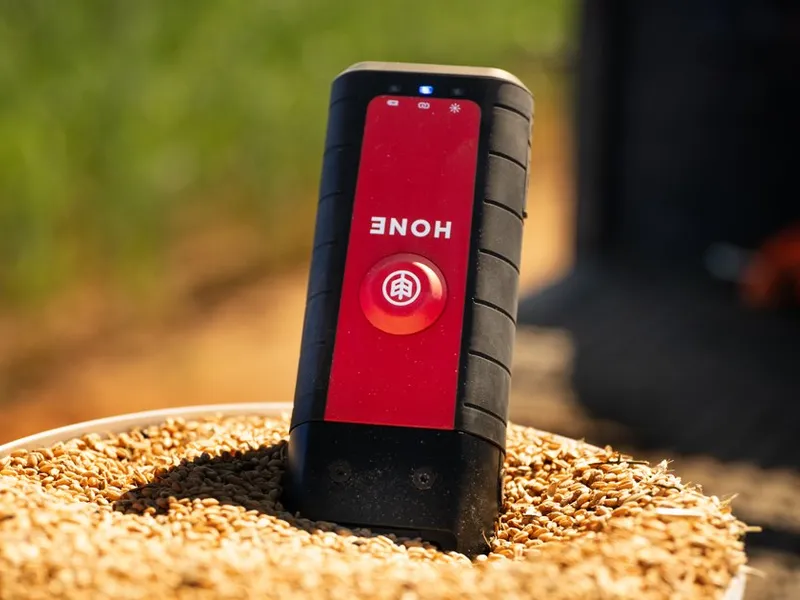
Product & industrial design
A collaborative product and industrial design programme resulting in a rugged, IP67-rated field instrument. Dual Gold winner at the 2021 Australian Good Design Awards, Product Design and Engineering Design.
In production with manufacturing partners since 2021
Learn more → Mechanical design
A custom rail-mounted tool for safe, precise cutting of plastic soil core liners, built to survive repeated use in agricultural sampling workflows.
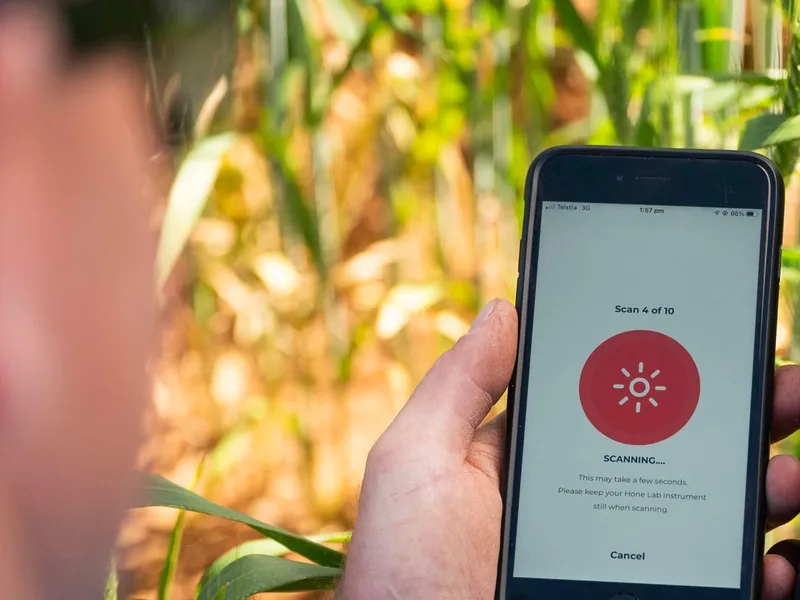
Cloud platform, licensed to product companies
The cloud platform behind connected products, carrying our clients’ branding rather than ours. Each customer gets a physically separate database, their own branding and users, provisioned by a single command, so isolation can be shown to an auditor rather than argued.
Learn more →Who we work with






Talk directly with the engineers who would do the work.